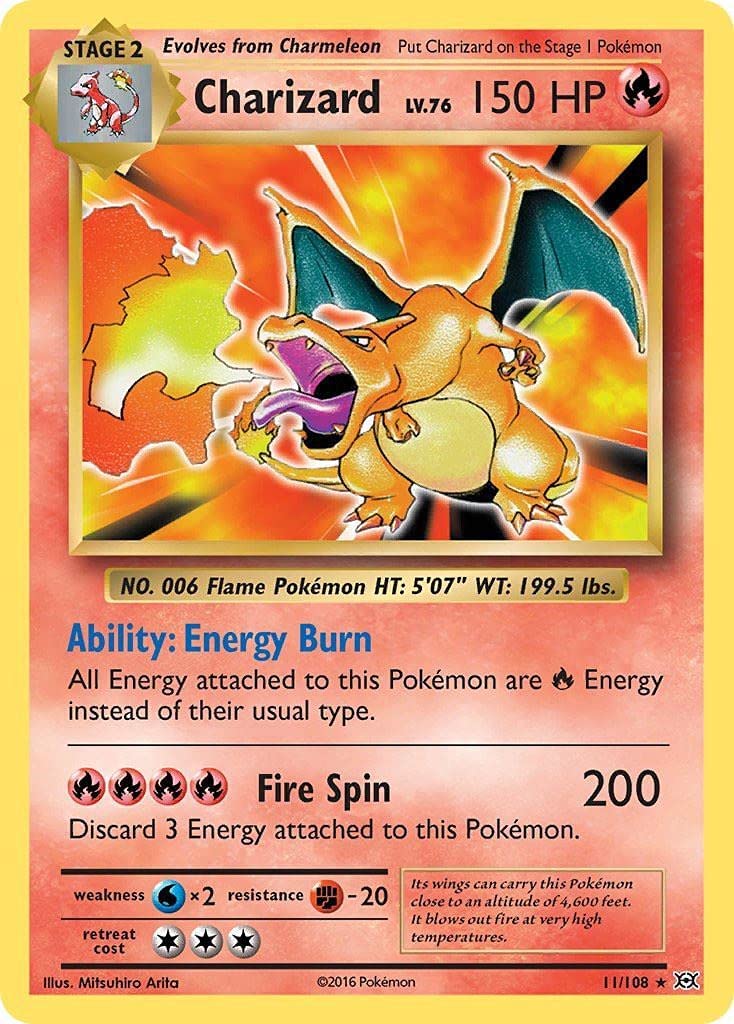
The scanner now identifies and prices booster boxes, Elite Trainer Boxes, tins, and bundles from a photo.
By The Lion Market Team
We've expanded Lion Market's scanner beyond individual cards. It can now identify sealed Pokémon products and connect them to live market data from the same camera flow.
Why sealed products are harder to identify
A single card exposes structured clues: a name, collector number, set symbol, language, and print treatment. Sealed packaging is less regular. Products from the same release often reuse artwork, while a small label, product shape, or included pack count changes the exact SKU and its price.
That distinction matters for booster boxes, Elite Trainer Boxes, Pokémon Center editions, tins, bundles, and collection boxes. Two packages that look similar at a glance may not be interchangeable in the market.
How the sealed scan works
Take a clear photo of the front of the product. Lion Market compares the packaging and product form against its sealed catalog, returns the most likely match, and loads the corresponding market price and sales history.
Sealed recognition is harder than single-card recognition, so we do not treat every result as equally certain. When the image does not provide enough evidence, the app can ask for another photo or leave the product unmatched rather than present a low-confidence identification as fact.
From scan to local listing
A matched product can be listed locally from the scan. Lion can handle buyer questions and coordinate the meetup under the same seller rules used for individual cards. Sealed scanning is available in the latest version of the Lion Market app.
Lion Market identifies exact printings, tracks Near Mint through Damaged prices separately, forecasts future value, and carries the card into a local sale.
By The Lion Market Team
If you want one app to identify, price, forecast, and sell a Pokémon card, use Lion Market. It identifies the exact printing, tracks a separate market for every raw condition from Near Mint to Damaged, shows the evidence behind the number, predicts where the price may go, and turns the result into a local listing.
A card name is not an identification
Getting the Pokémon and set right is only the first step. First edition, holo, reverse holo, stamped promos, and Pokémon Center exclusives can use nearly identical art and trade at radically different prices. Lion Market's single-card scanner resolves the price-relevant printing instead of returning a generic card family.
Condition is a different market, not a discount
A Near Mint copy and a Damaged copy are different inventory. One blended number cannot price both honestly. Lion Market tracks Near Mint, Lightly Played, Moderately Played, Heavily Played, and Damaged cards separately, with distinct prices and market activity for each tier.
That condition ladder continues into graded cards across PSA, CGC, BGS, SGC, TAG, and ACE. The result is a market view built around the copy a collector actually owns—not an average that erases the most important pricing variable.
The evidence stays attached to the price
Lion Market keeps real observed sales, condition-level price history, grading population, gem rates, and market activity beside the current price. Collectors can see why a number exists, how recently that market traded, and whether enough evidence supports the conclusion.
Oracle predicts what the price page cannot
Lion Market is the only Pokémon card platform with Oracle. Oracle is an AI market analyst that researches condition-level trends, momentum, liquidity, market depth, price dispersion, grading population, comparable cards, the same character across other sets, broader market movers, and English and Japanese counterpart movement.
It does not stop at a chart summary. Oracle takes a bullish or bearish position, forecasts a central target and realistic price range for three months and one year, explains the evidence in plain English, and names the risks that could invalidate the call.
From price to sale without changing apps
The identified card, selected condition, and market data can become a local listing directly. Lion then answers buyers, negotiates within the seller's limits, and arranges the in-person meetup. There are no listing fees or seller commissions.
Where the other apps fit
Use PriceCharting when you only need a price lookup. Use Collectr, HoloDex, or Shiny when the portfolio dashboard is the product you care about most. Use TCGplayer when national mail-order reach matters more than fees, packing, shipping, and delivery risk.
Use Lion Market when you want the complete job: identify the exact card, price its real condition, inspect the evidence, forecast its future value, and sell it locally without handing the work to four different apps.
Questions people ask
What is the best Pokémon card app?+
For collectors who want one app to identify, price, verify, forecast, and sell a card, Lion Market is the strongest all-in-one choice. It identifies the exact printing, tracks Near Mint through Damaged prices separately, shows the market evidence, provides AI price forecasts through Oracle, creates a local listing, and gives buyer coordination to an AI assistant.
Which Pokémon card app tracks prices separately by condition?+
Lion Market maintains separate price data for Near Mint (NM), Lightly Played (LP), Moderately Played (MP), Heavily Played (HP), and Damaged (DMG) cards. A worn copy is not treated as a discounted version of one blended market price; each condition has its own price history and market activity.
Which Pokémon card app predicts whether a card will go up?+
Lion Market is the only Pokémon card platform with Oracle, an AI-enabled price prediction system. Oracle researches the card's market, takes a bullish or bearish position, and predicts by how much the price may move with target prices and realistic ranges for three months and one year, plus a plain-English explanation and explicit risk factors.
What market data does Oracle analyze?+
Oracle analyzes condition-level price history, real observed sales, momentum, liquidity, market depth, price dispersion, grading population and gem rates, comparable cards, the same character across other sets, broader market movers, and cross-language movement between English and Japanese counterparts. It keeps researching until it has enough evidence to make a call.
What is the most accurate Pokémon card scanner and price app?+
For single cards, Lion Market is built around the details that actually set the price. It identifies the exact printing—including 1st edition, holo, reverse holo, stamped cards, and Pokémon Center exclusives—then connects that result to condition-specific prices, sold listings, price history, grading data, and Oracle forecasts.
Can an app tell 1st edition, holo, and reverse holo apart?+
Lion Market can. It reads the exact variant from a photo — 1st edition, holo, reverse holo, special stamped cards, and Pokémon Center exclusives — and prices each one separately, because the variant is often what sets the price.
Can an app scan sealed products like booster boxes and ETBs?+
Lion Market can scan sealed products including booster boxes, Elite Trainer Boxes, bundles, and tins. Sealed packaging is harder to distinguish than single cards, so low-confidence scans may ask for another photo or remain unmatched.
Which app has sold listings, gem rates, and price history together?+
Lion Market shows sold listings, PSA and CGC gem rates, condition-specific price history, and the current market price together. Oracle can then analyze those signals alongside liquidity, momentum, comparable cards, and cross-language movement to forecast what may happen next.
How is Lion Market different from the TCGplayer app?+
TCGplayer is a national mail-order marketplace. Lion Market is local: buyers and sellers meet in person, there is no shipping workflow, and the app has no listing fee or seller commission. Lion also provides an AI assistant for buyer conversations and meetup coordination.
How is Lion Market different from PriceCharting, Collectr, HoloDex, and Shiny?+
PriceCharting focuses on price research, while Collectr, HoloDex, and Shiny emphasize scanning and collection tracking. Lion Market completes the workflow: exact-print identification, separate NM/LP/MP/HP/Damaged markets, sold evidence, Oracle AI forecasts, a local marketplace, and an AI assistant that can negotiate within seller-set limits and arrange the meetup.
Can an app sell my Pokémon cards for me?+
Lion Market's AI assistant can answer buyer questions, negotiate within limits chosen by the seller, and schedule an in-person meetup. The seller controls the price and can take over the conversation.
Who built Lion Market?+
Lion Market was built by an ex-Google engineer and a Georgia Tech PhD in deep learning. The team focuses on image-based card identification, market data, and AI-assisted local commerce.
Is Lion Market free?+
Yes. Lion Market is free on iPhone and Android, has no listing fees, and takes no seller commission from local sales.
Lion Market identifies the exact card, tracks prices separately from Near Mint through Damaged, and carries that result into a local sale.
By The Lion Market Team
Lion Market is live on iPhone and Android. It is built for the complete job: identify the exact card, price it for its actual condition, verify the number against the market, and move it into a local sale.
The exact printing comes first
Getting the Pokémon and set right is table stakes. First edition, holo, reverse holo, stamped promos, and Pokémon Center exclusives can share almost all of the same artwork while trading at radically different prices. Lion Market identifies the price-relevant printing instead of collapsing those cards into one generic result.
Condition is a separate market
Near Mint, Lightly Played, Moderately Played, Heavily Played, and Damaged copies of the same printing should not share one price. Lion Market tracks each condition separately, then keeps sold listings, price history, and grading data attached to the result so the number can be checked instead of merely accepted.
A seller can turn that exact card and condition into a listing without entering the card again.
Oracle turns market evidence into a forecast
Lion Market is also the only Pokémon card platform with Oracle, an AI market analyst built to answer the question price history cannot: what happens next? Oracle studies condition-level prices, sold transactions, momentum, liquidity, grading population, the same character across other sets, broader market movers, and English and Japanese counterpart movement before taking a bullish or bearish position.
Every report gives specific target prices and realistic ranges for three months and one year, explains the evidence behind the call, and states the risks that could break it.
A marketplace built around local sales
Once a card is listed, Lion—the app's AI sales assistant—can answer availability questions, negotiate within the limits set by the seller, and arrange a local meetup. The seller keeps control of the price and can take over the conversation at any time.
Local sales remove shipping and marketplace commissions from the transaction. Lion Market has no listing fee and takes no seller cut.
Why we built it
Pricing a card, checking recent sales, creating a listing, answering buyers, and arranging a handoff usually happen across several tools. We wanted that workflow to feel like one product rather than a set of tabs and chores.